

mobvet
Country Information
Estonia is a country in the Baltic region of Northern Europe bordered to the north by the Gulf of Finland, to the west by the Baltic Sea, to the south by Latvia and to the east by Lake Peipus and Russia. Across the Baltic Sea the neighboring countries are Sweden and Finland.
The territory of Estonia consists of the mainland and of 2,222 islands in the Baltic Sea, covering a total area of 45,227 km2 and is influenced by a humid continental climate.
The sovereign state of Estonia is a democratic unitary parliamentary republic divided into fifteen counties. Tallinn, the capital of Estonia, and Tartu are largest cities and urban areas in the whole country. Population of Estonia is 1,3 million which density is 30.3 people per km². That is almost four times less than EU’s average – 116.7 people per km².
Estonia is a developed country with an advanced, high-income economy that was among the fastest-growing in the EU since its entry in 2004. Estonian citizens receive universal health care, free education, and the longest paid maternity leave in the OECD.
One of the world’s most digitally-advanced societies, in 2005 Estonia became the first state to hold elections over the Internet, and in 2014, the first state to provide e-residency.
Law and legislation
Estonia is an independent and sovereign democratic republic wherein the supreme power of the state is vested in the people. The powers of state are exercised solely pursuant to the Constitution and laws, which are in conformity therewith. The activities of the Government of the Republic and the courts must be organised on the principle of separation and balance of powers.
The Constitution of Estonia is the fundamental law, establishing the constitutional order based on five principles: human dignity, democracy, rule of law, social state, and the Estonian identity. Estonia has a civil law legal system based on the Germanic legal model.The court system has three-level structure. The first instance are county courts which handle all criminal and civil cases, and administrative courts which hear complaints about government and local officials, and other public disputes. The second instance are district courts which handle appeals about the first instance decisions. The Supreme Court is the court of cassation, and also conducts constitutional review, it has 19 members. The judiciary is independent, judges are appointed for life, and can be removed from office only then convicted by court for a criminal deed. The Estonian justice system has been rated among the most efficient in the European Union by the EU Justice Scoreboard.
Language and education
About 1.1 million people speak Estonian, one of the world’s smallest official national languages. It is used successfully in all areas of society. Estonians also speak a variety of other languages.
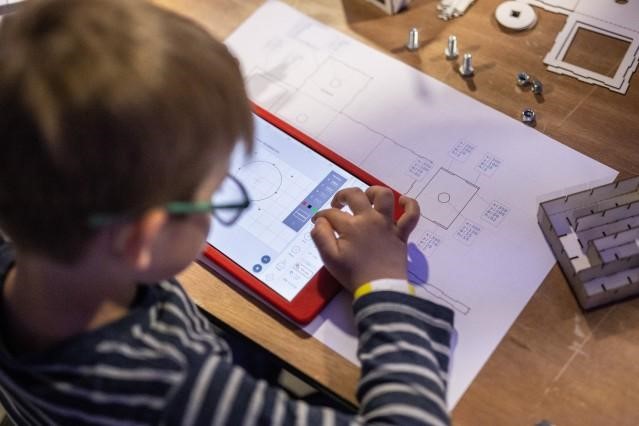
The education system is based on four levels: pre-school, basic, secondary, and higher education. A wide network of schools and supporting educational institutions have been established. The Estonian education system consists of state, municipal, public, and private institutions. There are currently 589 schools in Estonia. According to OECD’s PISA results, Estonian basic education is the best in Europe and in the top 3 globally. Our pupils’ science, math and reading skills are outranked only by Singapore and Japan.
Estonians understand technology: Skype revolutionized communication, TransferWise changed international money transfers, GrabCAD helps to build products faster and Starship robots reframe local delivery.
Culture
By culture consumption, Estonia is one of the leading countries in Europe. Our 1.3 million inhabitants make about 3.4 million museum visits, 3.5 million cinema visits, 2 million concert visits, and 1.2 million theatre visits annually.
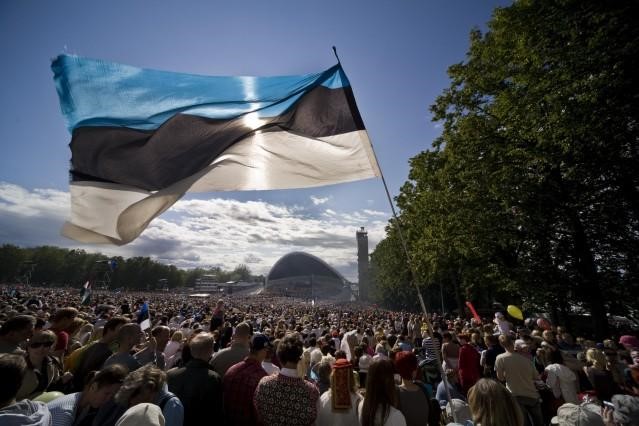
The tradition of Estonian Song Festivals (Laulupidu) started at the height of the Estonian national awakening in 1869. Today, it is one of the largest amateur choral events in the world. In 2004, about 100,000 people participated in the Song Festival. Since 1928, the Tallinn Song Festival Grounds (Lauluväljak) have hosted the event every five years in July. The last festival took place in July 2019.
Estonian choir music is world famous. Grammy Awards in the Best Choral Performance category have been received by Paavo Järvi, Tiia-Ester Loitme, and Ants Soots 2004; to conductor Paul Hillier and the Estonian Philharmonic Chamber Choir in 2007; and to conductor Tõnu Kaljuste in 2014. Arvo Pärt has been the world´s most performed living composer since 2010.
Society and economy
The digital signature, with legal standing equal to one made with ink, has been in wide use since 2002. The digital signature helps save the equivalent of one entire work week per year per working age adult. This is roughly equal to a stack of paper as high as the Eiffel tower saved each month.
One of the most popular digital services among Estonians is the digital prescription – a centralized, paperless system for issuing and handling medical prescriptions. A doctor prescribes medicine electronically and the patient presents their ID card at the pharmacy.
In May 2008, more than 50,000 people gathered for the “Let’s Do It!”, a nationwide initiative to clean Estonia of garbage. 10,000 tons of garbage was gathered in 5 hours. The movement has become international, 158 countries and territories participated in 2018.
Estonia has the most competitive and investment-friendly taxation system in Europe. The national debt is also the lowest in Europe. Export of Estonian products and services is over 77% of our GDP. The major exports are electrical machinery and equipment, wood and wood products, mineral products. Main export destinations are Sweden, Finland, and Latvia.
Fast Facts
- European Union membership: since 2004
- Official language: Estonian, with English widely spoken
- Currency: Euro €
- Time zone: GMT +2 in winter and GMT +3 in summer
- Country dialling code: 00372 or +372
- Emergency number: 112 (all emergencies)
- Plug socket: type F, with voltage of 230V and frequency of 50Hz
- Right-handed traffic
- Reflector compulsory in the dark
Adapted from Wikipedia https://en.wikipedia.org/wiki/Estonia#Education_and_science and Visit Estonia https://estonia.ee/ on the 29.06.2020
